
On the meeting where everyone agrees, the one person who changes it, and one thing to say this week
THE IDEA
Courage doesn’t mean we are not afraid. It means we act according to principle and what we believe is right, even when it means others may disagree with us.
One of the ideas I explore in Humble Power is how humility helps us develop that kind of courage.
THE STUDY
Psychologist Solomon Asch conducted a study that shows how difficult standing apart can be. Students participated in what appeared to be a simple visual test. They looked at a reference line and three comparison lines labeled A, B, and C, then answered aloud which line matched.
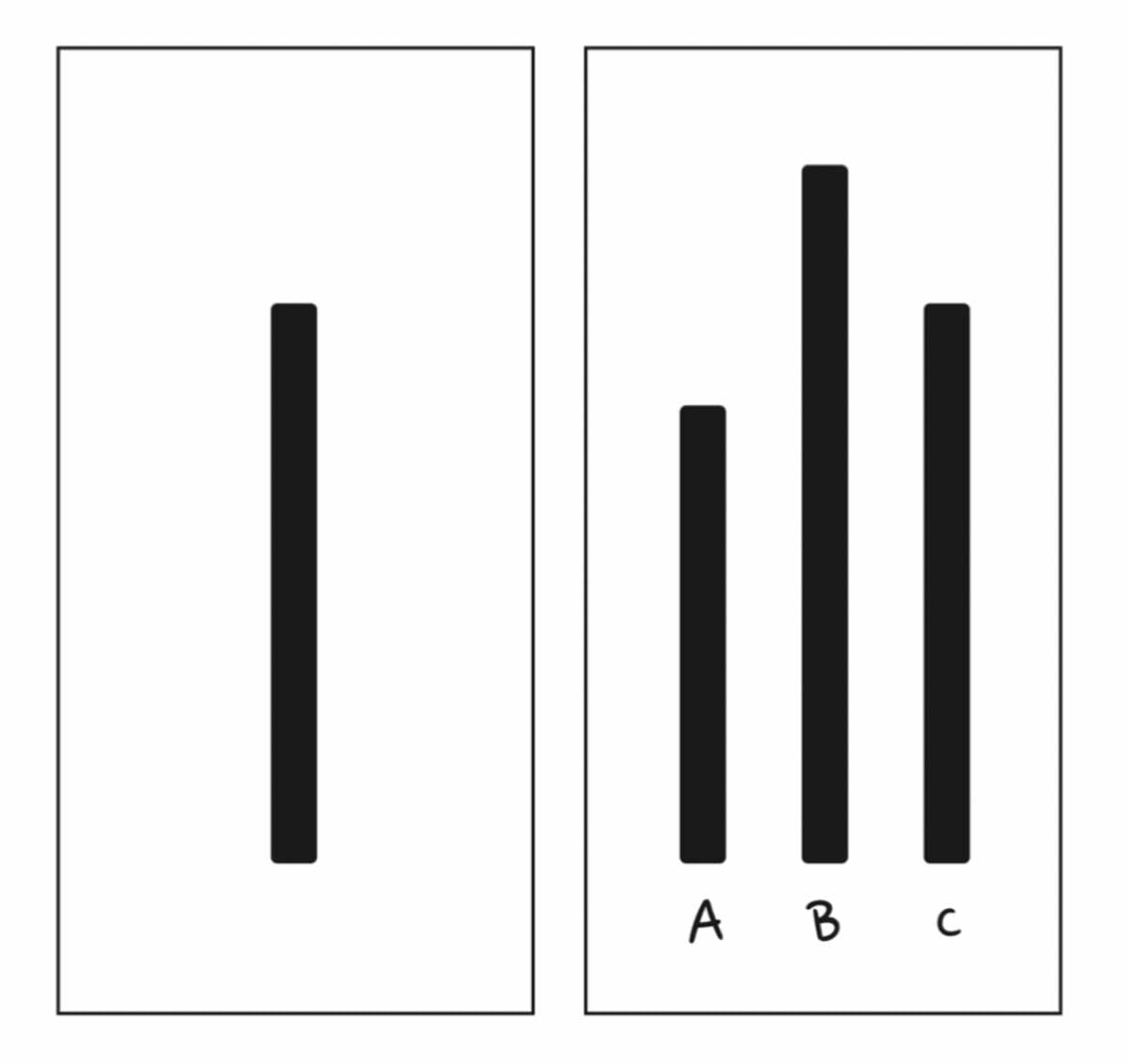
But there was a setup. The other people in the room were actors posing as fellow participants. They had been instructed to deliberately give the same wrong answer.
Imagine sitting there. You can clearly see that C matches. But the first person gives a different answer. Then the second. Then the third. Everyone seems certain.
By the time it is your turn, the question has changed. It is no longer simply, “Which line matches?” It is, “Am I willing to disagree with everyone in this room?”
About three-quarters of participants went along with the wrong answer at least once.
But when just one other person gave the correct answer, incorrect responses dropped by roughly 75 percent. One person willing to stand apart made it easier for someone else to do the same.
We face our own versions of that room. A meeting where we have a concern but everyone seems to agree. A conversation where someone is being treated unfairly. A decision where doing what is right could disappoint someone whose approval matters to us. A crucial conversation with someone important to you that you keep putting off.
How does humility help?
Humility helps us care more about what is right than how we are perceived. When protecting our image is our highest priority, disagreement feels threatening. When we recognize a purpose greater than ourselves, we have a reason to act even while we feel afraid.
The goal is to align with what is right and be willing to learn more about what that requires.
That is Humble Power.
THE QUICK WIN
Think of one situation where fear of disagreement has kept you from acting on a principle that matters to you.
Answer these questions:
- Is there a situation in my life where acting with more courage would help me move a meaningful project, relationship, or cause forward?
- What is the one area I will act with more courage this week?
- What will I do?
How does focusing on what is right, rather than my fear of being disagreed with, help me prioritize my next courageous action?
Then take one respectful, specific action this week. Raise the concern. Admit the mistake. Speak up for the person who is being dismissed.
You don’t have to wait until you feel unafraid. You can feel the fear, remain humble, and act with courage.
All my best,
Ethan
Thank you, Ethan. This reminded me that I don’t have to wait until I feel ready to speak up. This week, I will address one concern I’ve been avoiding, speak honestly and respectfully, and stay open to listening and learning.